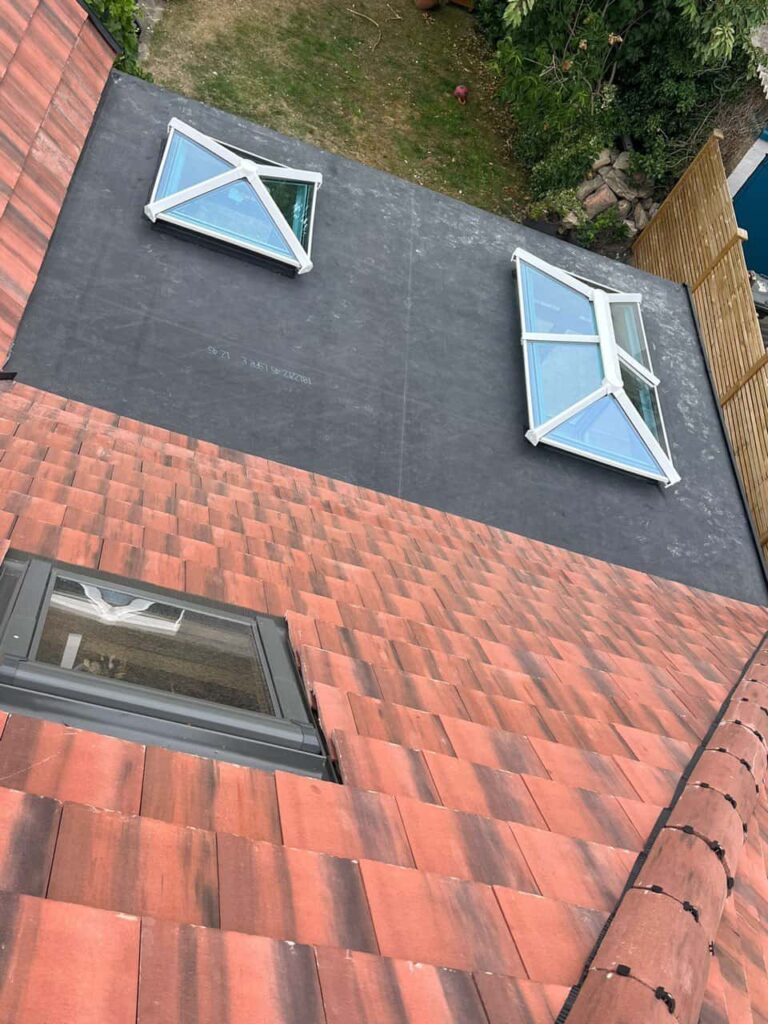
Roof repairs are often the right solution when damage is confined to a particular area and the surrounding materials remain in good condition. A slipped tile, isolated leak or damaged section of flashing can frequently be repaired without disturbing the rest of the roof. However, there are situations where continuing to address individual defects becomes less practical because deterioration is affecting the roofing system more widely.
For property owners in Radford, Coventry, the decision should be based on the actual condition of the roof rather than its age or appearance alone. A replacement roof becomes a practical option when it provides a more coherent solution to widespread or recurring problems that can no longer be addressed effectively through localised repairs.
When Does Roof Replacement Become More Practical Than Continuing With Repairs?
The distinction between a roof that can continue benefiting from repairs and one that deserves consideration for replacement usually depends on the extent and pattern of deterioration.
An individual defect does not normally justify replacing an otherwise serviceable roof. The situation changes when numerous components are deteriorating at the same time or repairs no longer provide lasting reliability.
Factors that can make roof replacement more appropriate include:
- Widespread deterioration across the roof covering
- Recurring leaks in several locations
- Roofing materials repeatedly becoming loose or damaged
- Deterioration affecting the materials beneath the covering
- Numerous areas requiring attention at the same time
- Increasingly frequent repair requirements
- Previous repairs remaining sound while surrounding materials continue to fail
- A general decline in the roof’s ability to remain weather-resistant
These signs need to be considered together. No single symptom automatically determines that replacement is necessary.
Widespread Deterioration Changes the Nature of the Problem
Localised deterioration and widespread deterioration require different approaches.
If a small group of tiles is damaged while the remainder of the covering remains secure, repairing that section can be highly effective. However, if tiles or other roofing materials are deteriorating across numerous areas, repeatedly replacing individual components may provide progressively less benefit.
At this point, the problem is no longer one damaged section. It is the overall condition of the roof covering.
Replacement can provide a more practical solution because the roof can be addressed as one complete system rather than as a collection of individual weak points.
Recurring Roof Leaks Can Indicate a Wider Issue
A roof that has leaked once may simply have developed an isolated defect. A roof that repeatedly develops water ingress deserves more detailed investigation.
Recurring leaks in the same location can indicate that the original source has not been fully identified. Leaks appearing in different sections may suggest that several parts of the roof are becoming vulnerable.
Water can also travel beneath roofing materials before becoming visible internally, so the location of a damp patch does not always correspond directly with the external defect.
Before deciding between another repair and replacement, it is important to establish whether water ingress originates from one repairable weakness or reflects deterioration across multiple parts of the roofing system.
Repair Frequency Provides Useful Information
The history of a roof can reveal how its condition is changing.
Occasional repairs over many years can be completely normal. Individual roofing components do not always deteriorate at the same rate, and maintaining them when necessary can help keep an otherwise sound roof performing effectively.
A different pattern emerges when repairs become increasingly frequent.
If a new defect develops shortly after another has been resolved, and this begins happening repeatedly, the roof may be moving beyond occasional maintenance into broader deterioration.
Considering repair frequency alongside the type and location of each defect can help determine whether continued localised work remains appropriate.
The Condition Beneath the Roof Covering Matters
A roof cannot be assessed accurately by looking only at its visible tiles, slates or surface covering.
Supporting components beneath the covering also contribute to its performance. Where these materials remain sound, individual repairs may integrate successfully with the existing roof.
If deterioration has become extensive underneath, repairing only the visible surface may fail to address the complete problem.
This is particularly relevant where prolonged water ingress has occurred or where sections of the covering have been unstable for some time.
A proper assessment should therefore consider the condition of the roofing system rather than simply counting damaged tiles or visible defects.
When Individual Repairs Begin Providing Less Benefit
There is an important difference between a roof that can be repaired and a roof where continuing to repair individual defects remains the most practical approach.
Technically, it may still be possible to replace a tile, repair flashing or treat another localised problem. However, if surrounding materials are also deteriorating, another weakness may appear elsewhere soon afterwards.
In these circumstances, each repair may solve today’s defect without substantially improving the reliability of the roof as a whole.
Replacement becomes worth considering when addressing the complete roof provides a more dependable outcome than continually moving from one deteriorated section to another.
Roof Age Should Not Be the Only Deciding Factor
It is easy to assume that an older roof automatically needs replacing, but age alone does not provide enough information.
Some older roofs remain serviceable because their materials are still performing well. Conversely, a roof does not need to reach a particular age before replacement becomes appropriate if its condition has deteriorated significantly.
The decision should therefore focus on physical condition.
The security of the covering, evidence of water ingress, condition of supporting materials, previous repair history and extent of deterioration provide far more useful information than age alone.
Previous Repairs Do Not Automatically Make Replacement Necessary
A roof with several repaired areas is not necessarily a poor roof.
Well-completed repairs can remain completely serviceable, and retaining them may be perfectly appropriate if the surrounding materials are also in good condition.
What matters is whether the repaired areas form part of a stable roofing system.
If previous repairs remain sound while different surrounding sections continually deteriorate, this can indicate that the broader roof covering is becoming less dependable. In that situation, replacement may eventually provide a more unified solution.
The number of repairs is therefore less important than the pattern they reveal.
Multiple Roofing Problems Can Point Towards a Common Cause
Sometimes a property appears to have several unrelated roof defects when they are actually connected to the same broader condition.
Loose tiles, recurring leaks, deteriorated flashing and weakened roof details may all develop as materials age and become less secure.
Treating each symptom independently can make it difficult to see this pattern.
A whole-roof assessment helps determine whether the problems are genuinely separate or whether they are different signs of the same underlying deterioration. This information is essential when deciding whether repair or replacement is the more suitable approach.
Replacement Can Provide an Opportunity to Address the Roof as a Complete System
One advantage of replacement is that the roof can be approached comprehensively rather than section by section.
The existing covering can be assessed alongside the relevant supporting materials and roof details, allowing the new system to be installed consistently across the affected area.
This can be particularly valuable where numerous sections have deteriorated at similar rates.
The objective is not replacement for its own sake. It is to create a reliable roofing system where attempting to preserve extensively deteriorated materials would no longer provide a sensible long-term result.
A Professional Assessment Helps Avoid Unnecessary Replacement
Considering roof replacement does not mean that replacement will automatically be the recommended solution.
A detailed assessment may reveal that deterioration is far more localised than it initially appears. In this situation, targeted repairs may still restore reliable performance while retaining the serviceable parts of the roof.
Equally, an inspection may confirm that deterioration extends across enough of the roof to make repeated small repairs increasingly ineffective.
This is why diagnosis should come before the decision. The appropriate solution can only be identified once the extent and cause of the problems are properly understood.
What Should Be Considered Before Choosing a Replacement Roof?
Before replacement is recommended, the roof should be considered in its entirety.
The assessment should establish which materials remain serviceable, where deterioration is concentrated, whether defects are connected and how successfully previous repairs have performed.
The expected reliability of further repairs also matters.
If targeted work can reasonably restore dependable performance, replacement may not be necessary. Where the existing roof has too many interacting weaknesses for isolated repairs to achieve this, a replacement roof can become the more practical solution.
Replacement Roofing in Radford, Coventry
For homeowners in Radford, Coventry, deciding whether a roof should continue to be repaired or considered for replacement requires a clear understanding of its current condition.
At Radford Roofing Repairs, we assess both the immediate roofing problems and the wider covering before recommending an appropriate approach. Where existing materials remain serviceable, targeted repairs can continue to play an important role. Where deterioration has become extensive, a replacement roof may provide a more suitable way of restoring consistent protection across the property.
The focus should always remain on recommending work that reflects what the roof genuinely requires rather than assuming that either repair or replacement is automatically the correct answer.
Conclusion
A replacement roof becomes the most practical option for some properties when deterioration is widespread, defects are increasingly frequent or individual repairs no longer provide meaningful improvement to overall reliability.
This decision should never be based on one damaged tile, a single leak or roof age alone. The condition of the complete roofing system, including its repair history and underlying materials, provides a much clearer basis for determining the appropriate approach.
If your roof in Radford, Coventry is developing recurring problems and you are uncertain whether further repairs remain suitable, contact Radford Roofing Repairs. We can assess its overall condition and recommend an appropriate solution based on what the roof actually needs.
Call us on: 024 7542 4996
Click here to find out more about Radford Roofing Repairs
Click here to complete our contact form and see how we can help with your roofing needs.